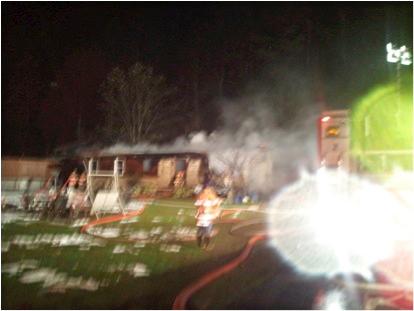
On Oct. 31st at approx 4:30 am, the Morrisvale VFD was dispatched to provide tanker assistance to a neighboring department. Because of the Hurricane Sandy snow storm, radio communications were limited due to the numerous power outages at tower sites and a generator failure. Upon arrival, Morrisvale units were told that the nearest hydrant was 1.5 miles away. One 3,000 gallon tanker was beginning to shuttle from the hydrant as was a 1000 gallon pumper and another 3000 gallon tanker was due to arrive very soon.
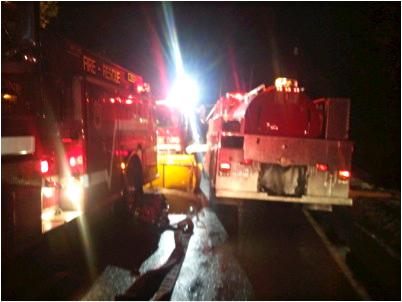
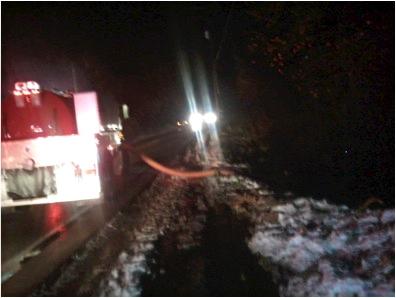
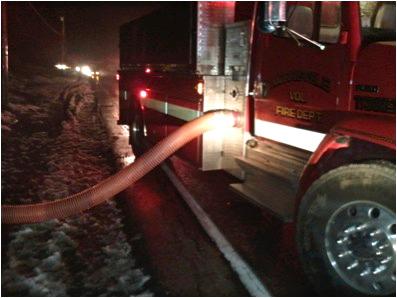
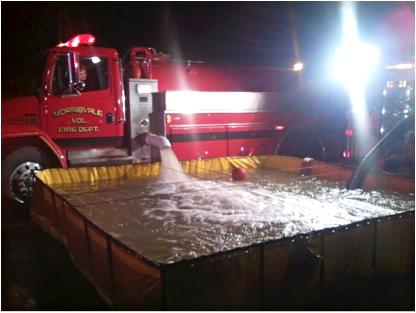
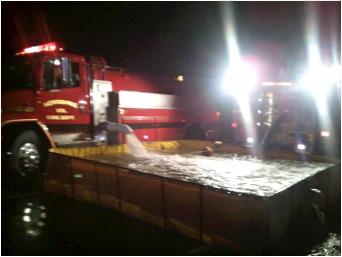
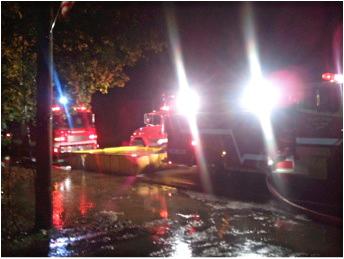
After surveying the scene, Morrisvale set up beside the drop tank and dumped their 2000 gallons of water. At the same time, they laid two lengths of suction hose to a small stream and once the vacuum tanker was empty, they refilled and dumped into the dump tank again. The Morrisvale vacuum tanker kept repeating the process.
When it was all said and done, the vacuum tanker had supplied approximately 20,000 gallons of water from the stream, maintaining two 1-3/4" lines and one 2-1/2" line on the fire ground. They basically ran a tanker shuttle without ever moving the truck, or as Charlie Clark says "it's like a portable dry hydrant".
The other trucks that were hauling from the hydrant never had to dump meaning that there was an additional 7,000 gallons of water in reserve in the event that it would have been needed or had there been another incident.
Just think of the safety aspect alone of not having to put tankers on the road for a shuttle, especially in the snowy, icy/wet conditions that crews were facing. The set-up also allowed the incident commander to become very aggressive with the fire attack knowing that he had a secure water source. This is just one more example as to the versatility of a vacuum tanker and what it can do.
Some Lessons Learned/Final Thoughts
- Learn to identify alternative water sources.
- The Firovac low flow/ floating strainer is worth its weight in gold. It allowed the vacuum tanker to fill from the small stream in less than 2 minutes, meaning that they were providing 2000 gallons of water every 2 minutes or so, or approx 1000 gpm when needed.
-The vacuum tanker makes water available that is otherwise hard to use.
-If needed, remember that you can use LDH to make a "dump extension" to reach the dump tank.
-This was all done with just two FF's and... just one FF after the initial setup of the hose. |