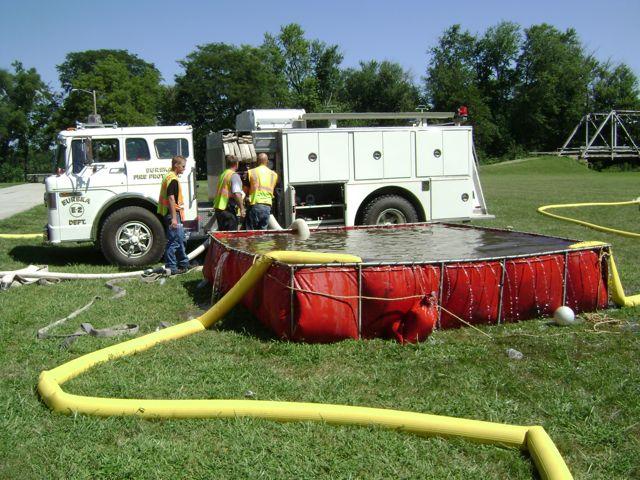
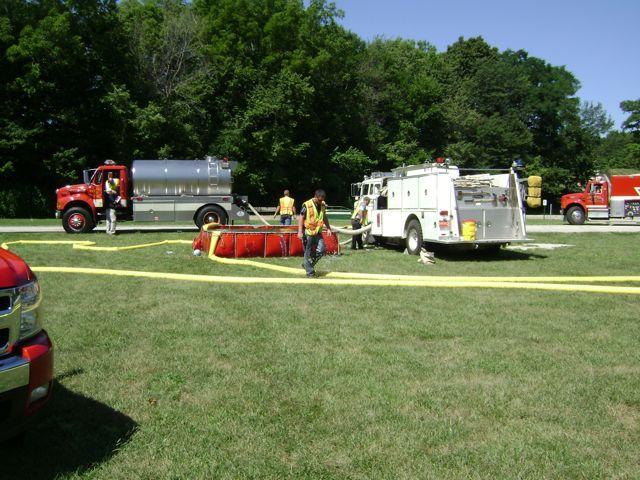
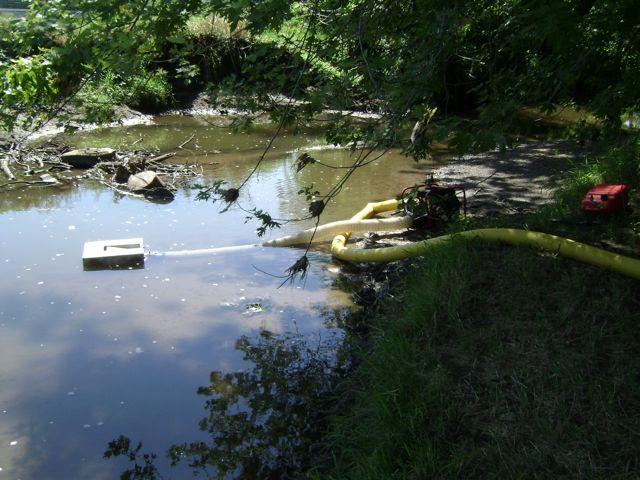
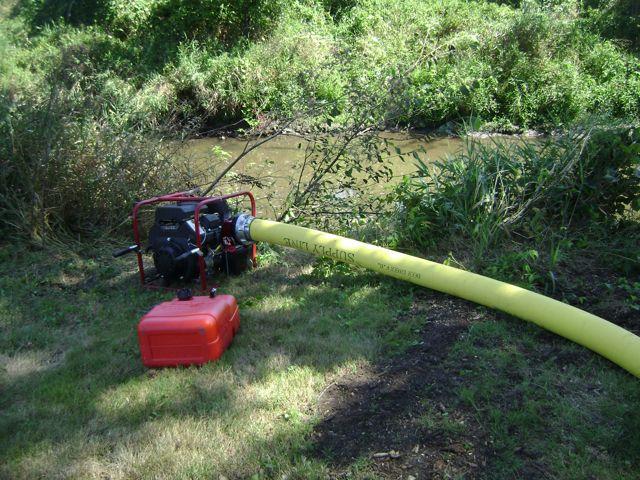
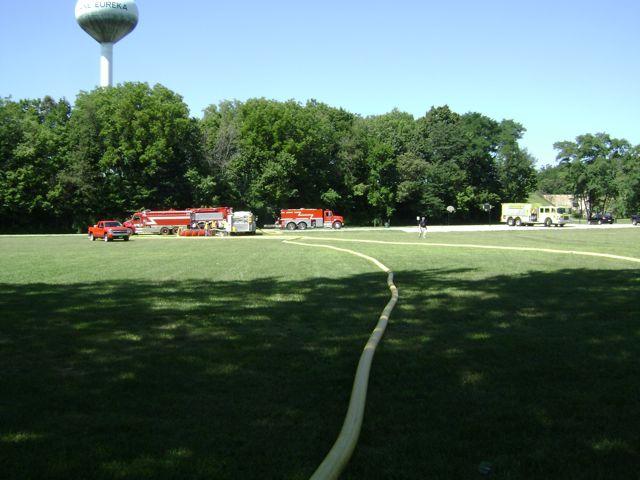
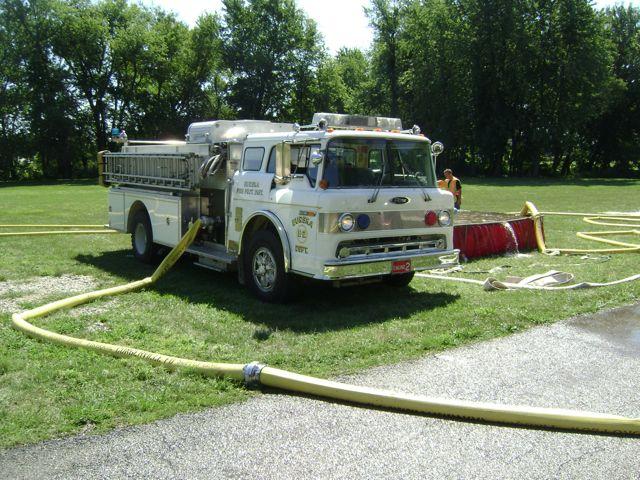
Portable fire pumps have seen their use and popularity incrase and decrease over the years - some FDs use the devices all the time - others have never owned one. One advantage of using portable pumps is the ability to access water that a pumper might not be able to get to and then use that water to support a tanker fill site. At this drill in Deer Creek, Illinois, two, 500 gpm portable pumps supply water via 300-ft of 5-inch hose to a dump tank from which a 1,000 gpm drafts and then fills tankers. We sometime refer to this set-up as an open relay.
Two, 500 gpm pumps are used to keep this dump tank full so that the pumper can fill tankers at 1,000 gpm.
This open relay is an efficient way to use portable pumps that otherwise would not provide enough intake pressure at the suction inlet on the pumper.
The use of 5-inch LDH made a huge difference in this operation because it allowed water to be moved over 300-feet with little friction loss - thus maximizing the pump's output for the hose set-up.
Another factor that "worked in the favor" of the operation was lift. The lift was less than 3-feet, therefore the portable pumps could commit their workload to discharge operations.
One limiting factor when using portable pumps is fuel consumption. However, at this 2-hour drill, fuel consumption was not an issue.
The 300-ft lay of 5-inch hose was impressive.
This 1,000 gpm pumper was able to draft from the dump tank and fill tankers at 1,000 gpm using LDH. This most likely could not have happened had the portable pumps fed the pumper directly - the pumper's intake pressure would have been too low thus causing the LDH to collapse and cavitation to occur.