Just because NFPA 1901 requires a minimum of 20-feet of suction hose (or 15-ft of supply hose) on Pumpers and Mobile Water Supply Apparatus (if equipped with a pump), this does not mean that MORE suction hose cannot be carried. Folks often think that a tanker has no need for suction hose - especially if that tanker has no fire pump. Well, the FDs that are good at hauling water for fire protection know that you can never have too much suction hose, because there always seems to be a need somewhere in a water hauling operation. Thus, a tanker that carries a dump tank, suction hose, and a jet siphon is a tanker pretty well equipped to help expand a dump-site operation.
Another key point about carrying suction hose on a tanker is to size the length of the hose to fit the tanker. Many times, two, 15-ft sections of suction hose can be carried on the larger tankers. The longer lengths can make a huge difference at dump sites in terms of spacing out tanks and running multiple jet siphons. And at a tanker fill site, the longer lengths can really help out a fill site pumper that has "come up short" at a supply source.
Remember, the NFPA standards are minimum performance standards - for rural water supply operations - don't get caught up in the "minimum" trap!
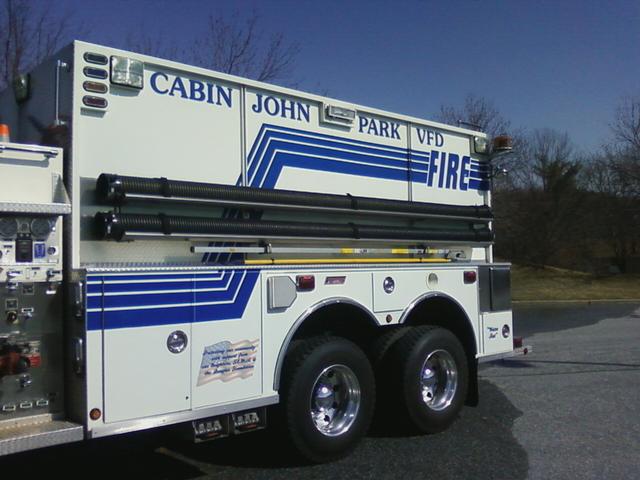
This 3,500-gallon tanker carries suction hose in lengths beyond the traditional 10-ft section.
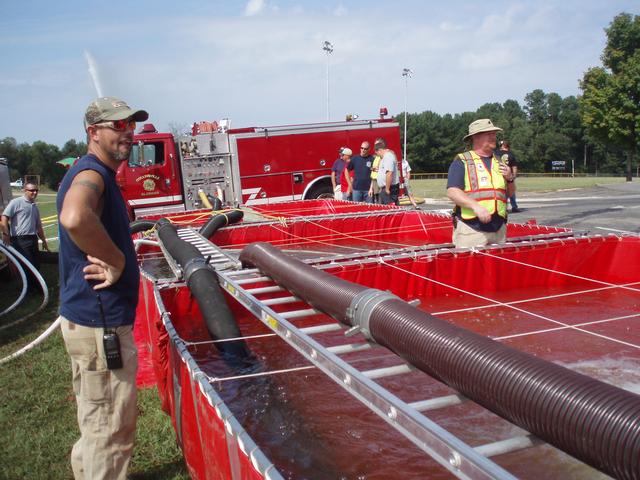
Suction hose is a valuable commodity at a "big water" hauling event. A tanker arriving with suction hose, a jet siphon, and a dump tank is a huge asset at such an operation.