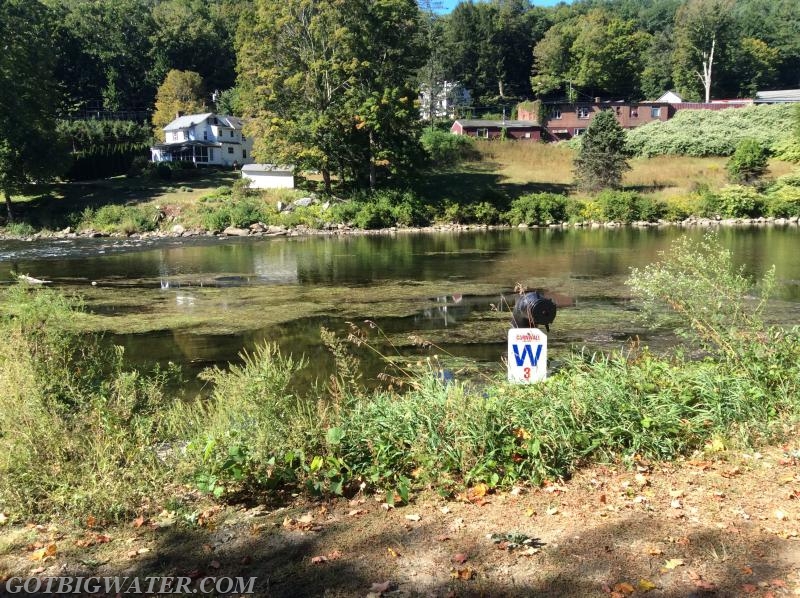
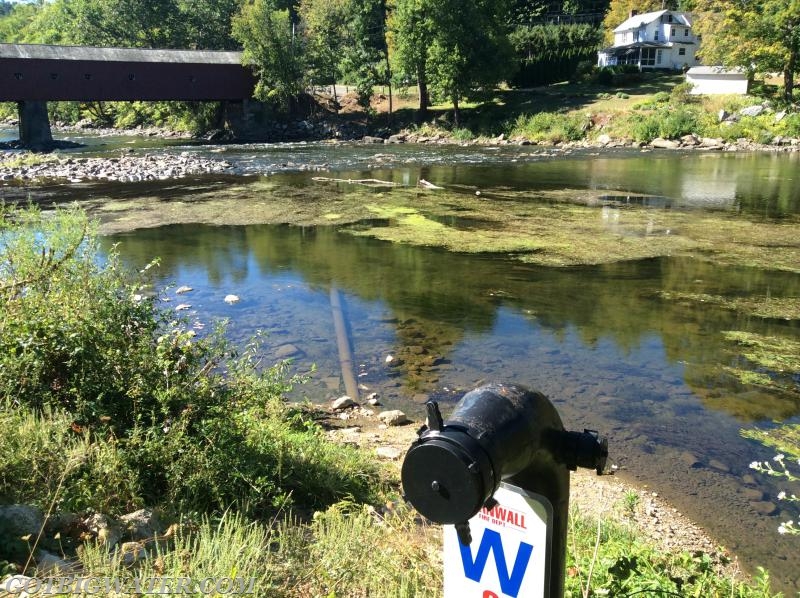
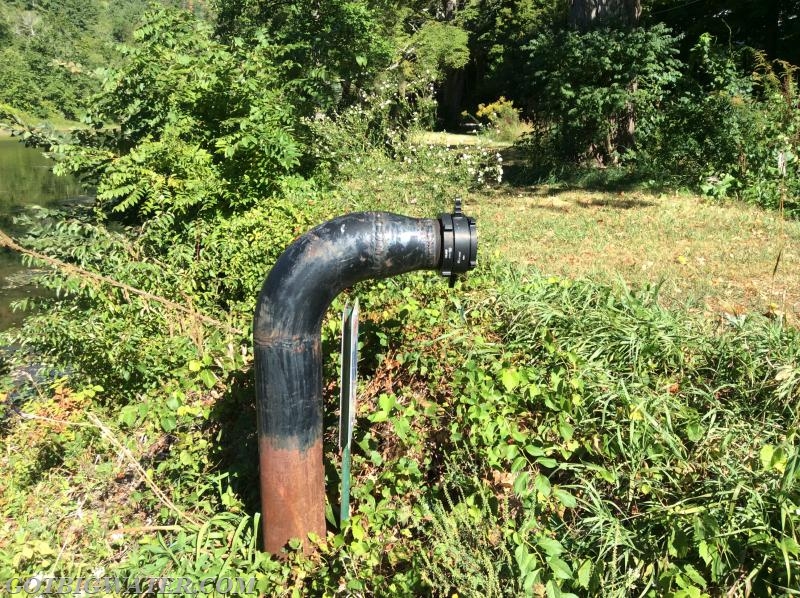
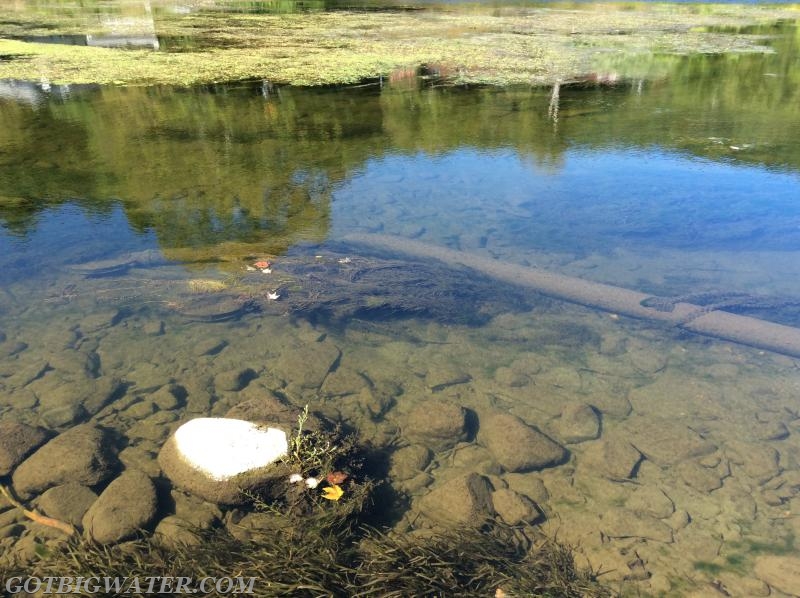
We often receive pipe questions regarding installing a "fixed," or stationary dry fire hydrant in a moving body of water. After having seen a number of failed installations and having consulted with our peers in the industry, we believe that the use of welded steel pipe is the current best practice when installing dry fire hydrant piping in moving bodies of water such as rivers and fast moving creeks that are subject to flood debris and ice floe. Welded steel pipe is superb in withstanding ice floe and storm debris - and while more costly to install, the steel pipe is more likely to survive and have a longer useful life than a plastic pipe installation. When going with a welded steel pipe design, using 8-inch pipe will reduce friction loss in longer runs of pipe while generally not increasing the excavation costs.
The welded steel pipe is a permanent installation in the river, which has ice floe in the winter and flash flood debris at other times.
This DFH located along the Housatonic River in Connecticut uses 8-inch welded steel pipe reduced to a 6-inch fitting for FD connection.