We had the opportunity this past weekend (November 3rd) to conduct a rural water movement class in Putnam County, West Virginia. The class was attended by multiple departments and apparatus was provided by Eleanor VFD, Winfield VFD, Bancroft VFD, Rt.34 VFD, Wharton- Barret VFD and Morrisvale VFD. There were 5 trucks total in the shuttle, 3 of which were vacuum tankers. The other 2 participants were a 1000 gallon tanker from Bancroft VFD and A 750 gallon pumper from Winfield VFD. These trucks were used in the shuttle to show that you can utilize pumpers and small pumper/ tankers to enhance your shuttle. The drill was held at the Winfield Locks and Dam on the Kanawha River, so a water source was not an issue. We ran the drill for 80 minutes and averaged 609 gpm for the 80 minutes, peaking around 700 gpm. This was a 2.2 mile shuttle. We did lose water a couple times, which was due to the Vac trucks having to wait at the fills site, as only one hose was laid to the river. We added a second hose and things smoothed out. Always remember that if your tanker is not traveling, filling or dumping you are losing efficiency. The fill site for the vac tanker was in the same area as the conventional fill site, which became very congested. In an effort to relieve the congestion approximately 116' of 6-inch suction hose was laid to the river so the vac trucks could fill and still allow room for the conventional fill site. The vertical lift on this was 8-10 ft.
At the end of the drill we had the opportunity to test a low level strainer designed specially for the dump tank. The results were amazing as we saw flows over 1600 gpm from a 1500 gpm pumper. The other thing that was impressive was that this strainer would not float up (like many others on the market) when flows were approaching 1000 gpm. As a matter of fact, the harder the truck pumps the more the strainer will stay down due to its unique design. There will be a few more tests done on this strainer and once it is totally proven, more info will be passed on. Special thanks to all who attended & provided apparatus, Glen Whittington for doing the leg work on the class, the Putnam County Fire Association for the invite and the excellent spaghetti!
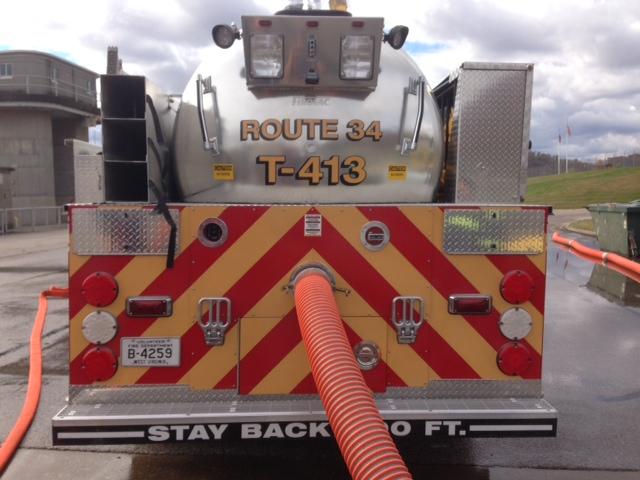
Vacuum tankers filling through 116' of 6" suction hose
Bancroft VFD Pumper / Tanker being filled at the fill site.
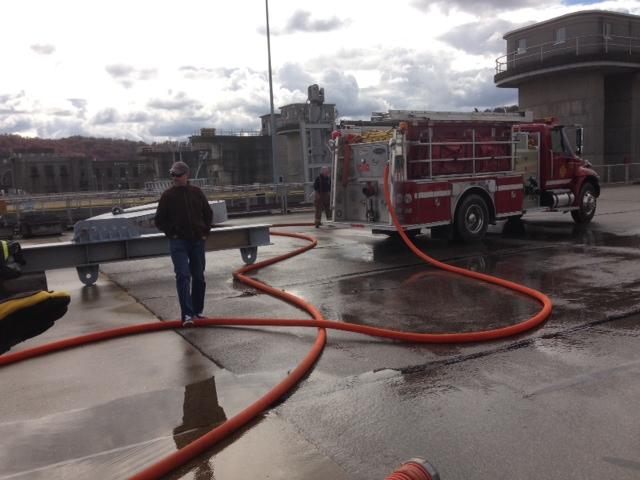
Rt.34 VFD Engine served as the fill site pumper
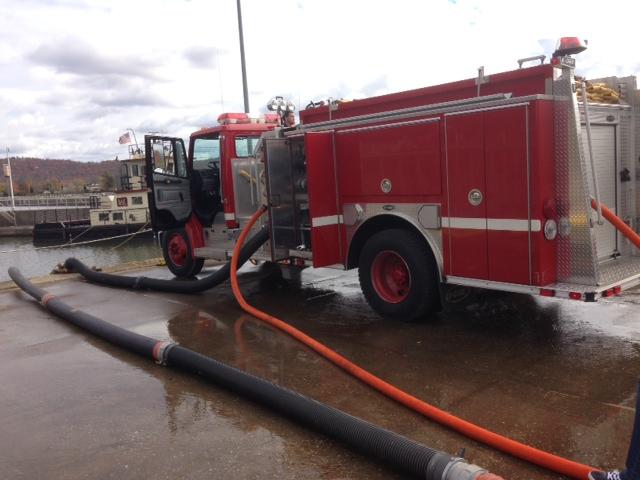
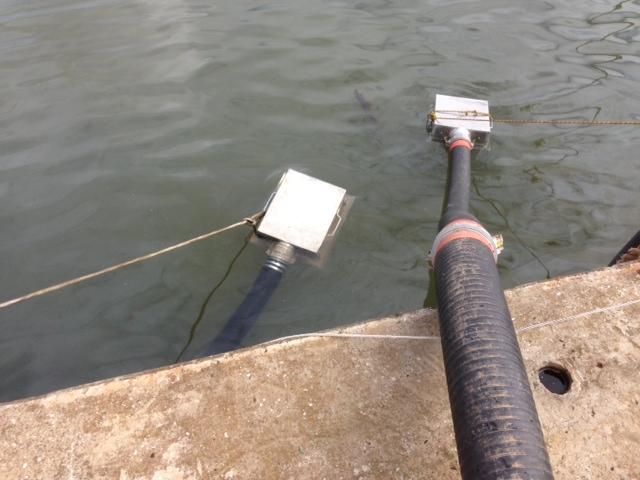
This is a picture of the vacuum tanker suction hoses in the water. About midway through the drill, a second fill line was added as we were losing time waiting on the other fill line to become available. Remember any time you are waiting to fill it is time to set up another fill site.
Rt 34 vacuum tanker filling.
Both vacuum tanker fill lines being utilized.
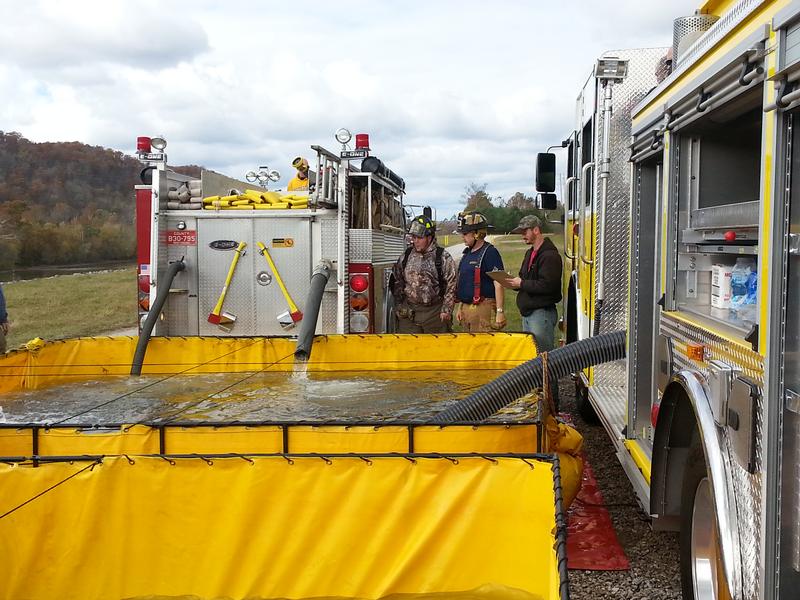
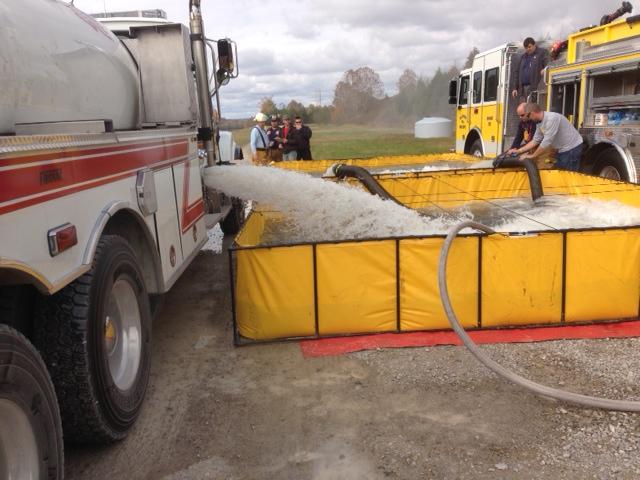
Bancroft Pumper/ Tanker 514 dumping into a dump tank with jet dump. Even though this tanker only had a 1000 gallon tank, it did contribute another 63 gpm to the shuttle. Good job specing the pumper with a jet dump.
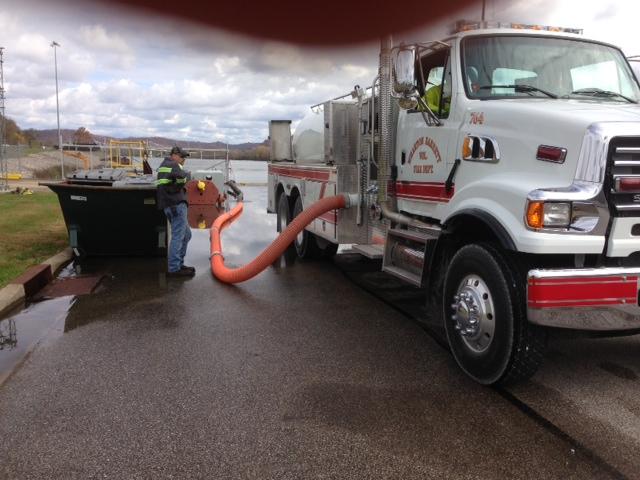
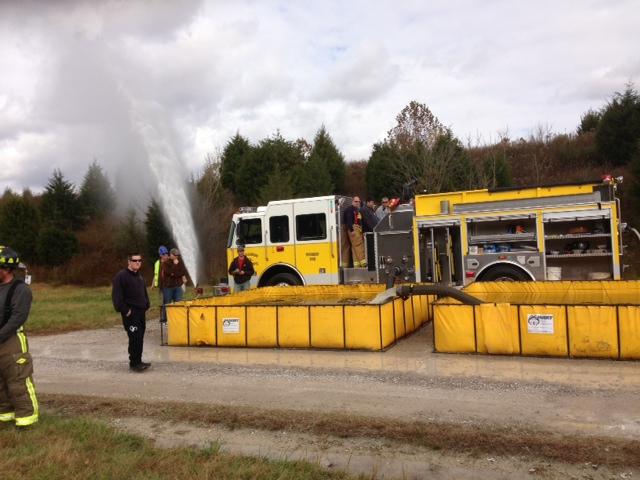
Morrisvale Tanker 361 offloading its 2,000 gallons.
It is critical when dumping into the primary dump tank not to dump on the strainer. In this instance, the PVC dump chute was used to control the flow direction.
Winfield VFD had a very innovative way to dump their pumper. They had two short sections of suction hose that they could hook to the 2 rear discharges on the truck and pump the water off into the dump tank. Almost all big fires usually have pumpers staged that are not being used other than to transport manpower. Why not utilize their water? Just make sure you pull them out of the way so that they are not blocking the big tankers.
Good job by the pump operator flowing the transfer tubes! One thing that we learned was that as long as we could maintain 150 psi on the transfer tube lines, we could throttle the valve back to reduce the gpm's that we were losing through them.
Eleanor VFD's 1500 GPM Sutphen pumper was the dump site pumper. Very nice truck
Rt. 34 VFD offloading 2,600 gallons. Note that the transfer tubes are still running. We are often tempted to turn them off as the tank gets full (usually when a tanker is dumping). However, since water transfer is always an issue in high flow situations, I'm a believer in letting them run even if the tank overflows just a little bit.
Wharton-Barrett tanker 764 dumps its 3,000 gallons.