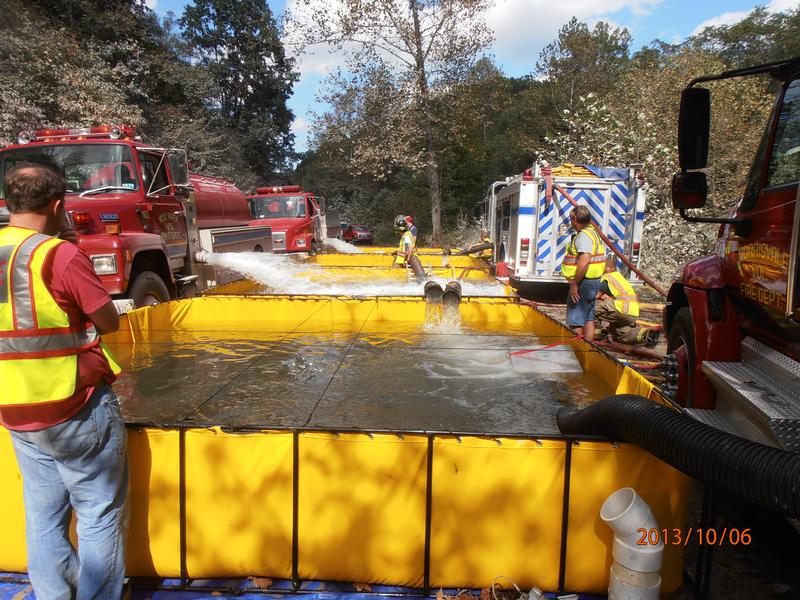
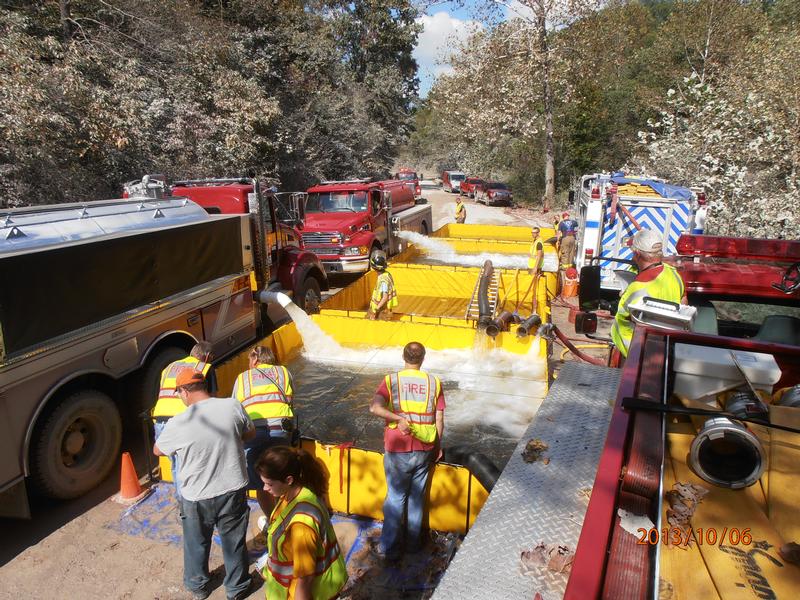
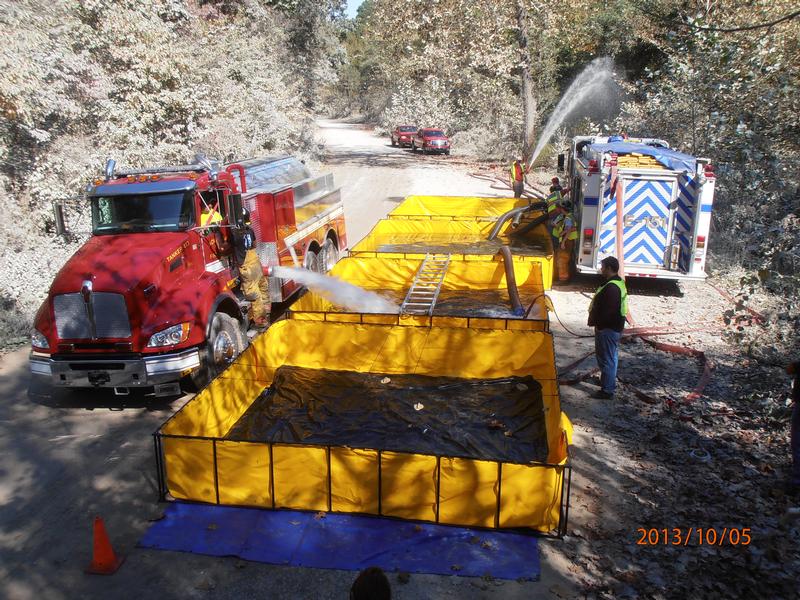
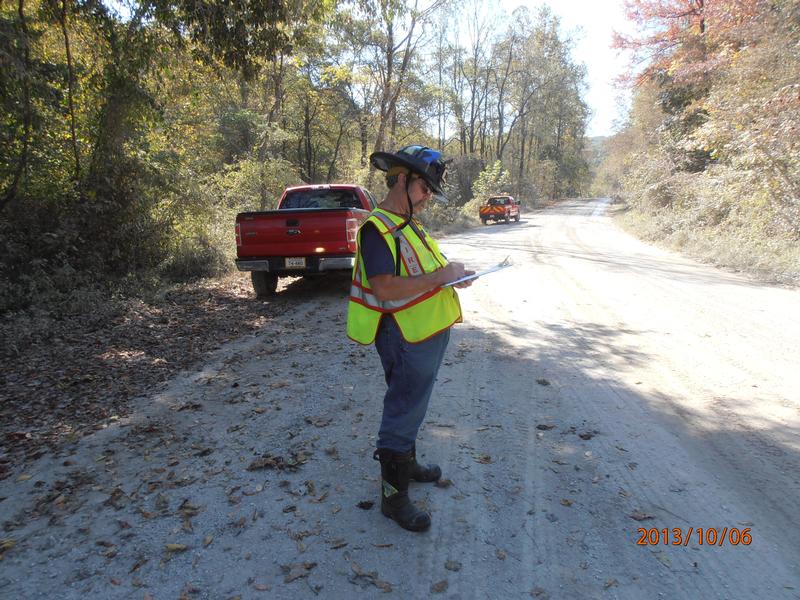
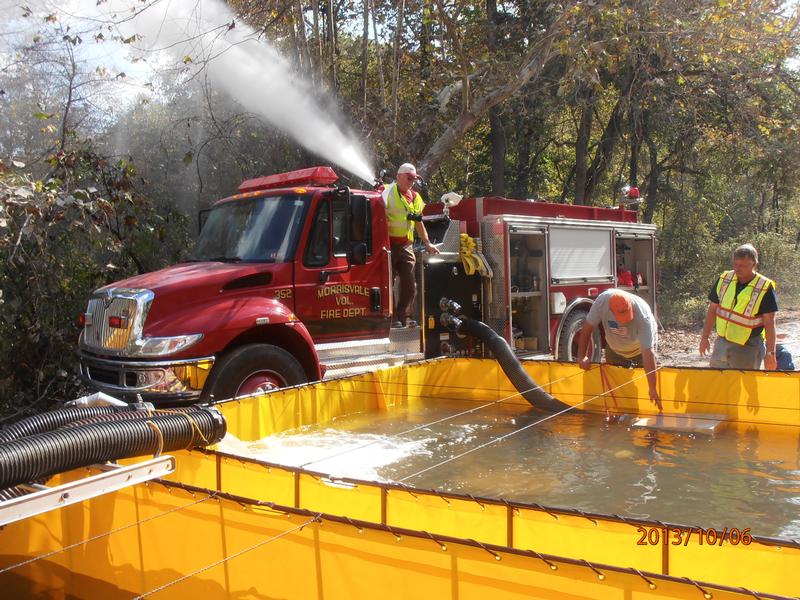
The Morrisvale VFD hosted a water shuttle drill on Oct. 5th & 6th. 6 Vacuum tankers participated in the drill, meaning NO FILL SITE PUMPERS WERE NEEDED! The shuttle averaged 884 GPM, peaking at one point at 1215 gpm. I expected our average to be in the 1000-1250 gpm range, but we were hampered by leaves in the stream that would get in the strainers and slow the fill times. It also created problems for the fill site pumper, as we were hauling water and leaves to the dump tank which stopped the strainer up on the pumper. Danville VFD brought their 2000 gpm pumper for the drill, but we kept having trouble with what we thought was the pressure governor. We eventually brought in another pumper, which experienced the same issue, at which point we figure out the strainers were clogging with small pieces of leaves. We rectified this by using the FIROVAC Floating strainer without the pan, which gave us enough surface area that it did not clog (we also flowed over 1350 gpm through this pumper for a short period of time). Danville then began pumping the transfer tubes to keep water to the other engine which was setup at the very last dump tank, which was a challenge in its self. The crews did an excellent job overcoming this adversity and getting another truck setup. Special thanks to Rt. 34 VFD, Danville VFD, Guyan River VFD, Mud River VFD, Wharton-Barrett VFD for providing apparatus and the Morrisvale VFD for once again hosting the class. Thanks to GBW member Charlie Clark for the photos.
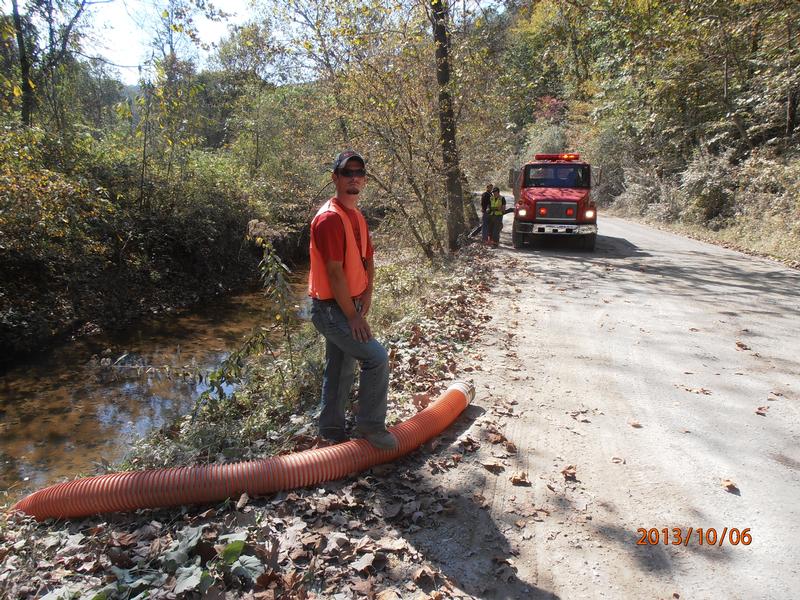
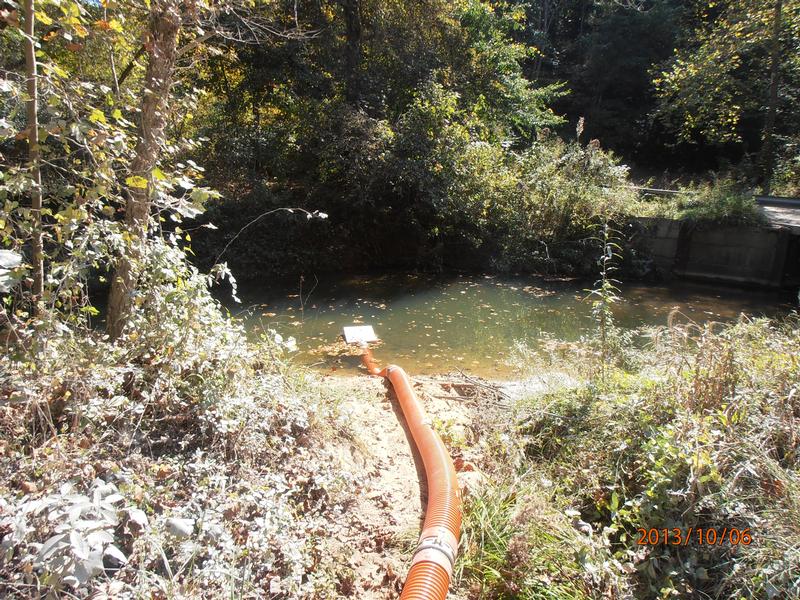
Fill Site #1. Efficient, 2 fill points , 2 people on the ground to connect and disconnect fill hose.
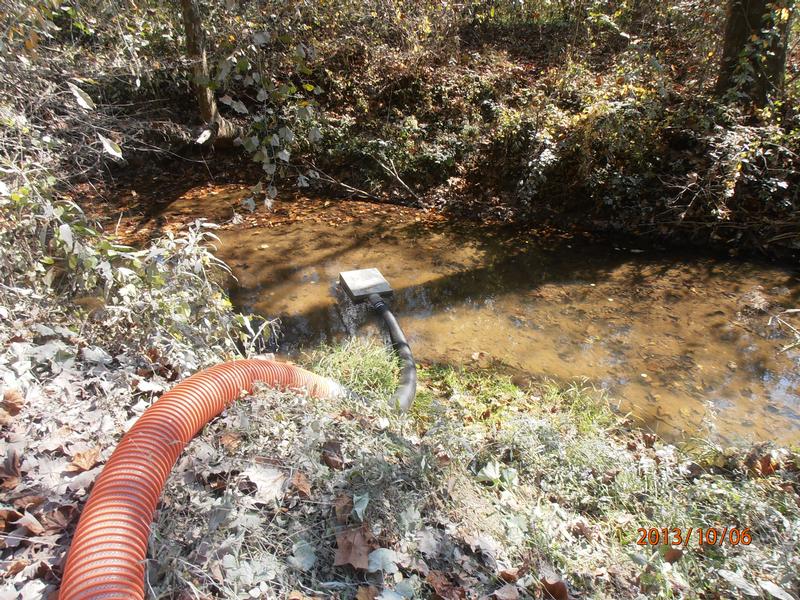
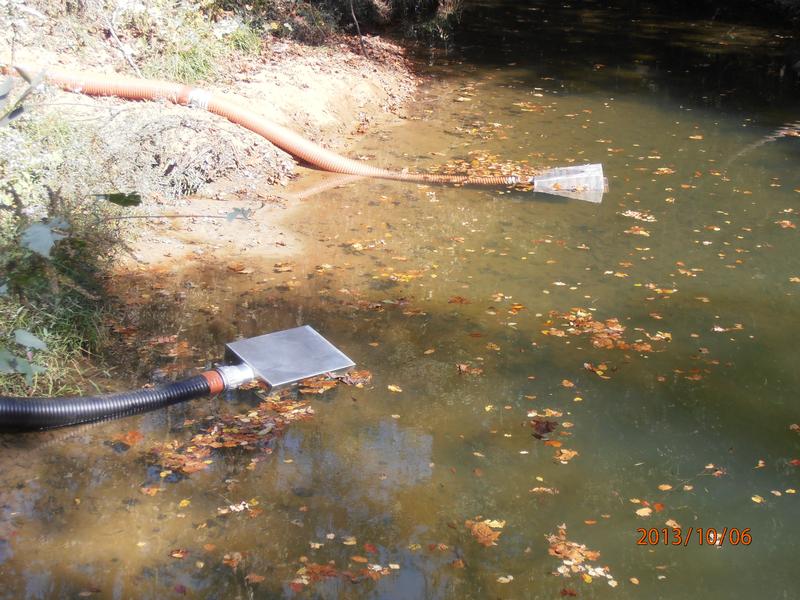
Fill Site #1 stream and low level strainer
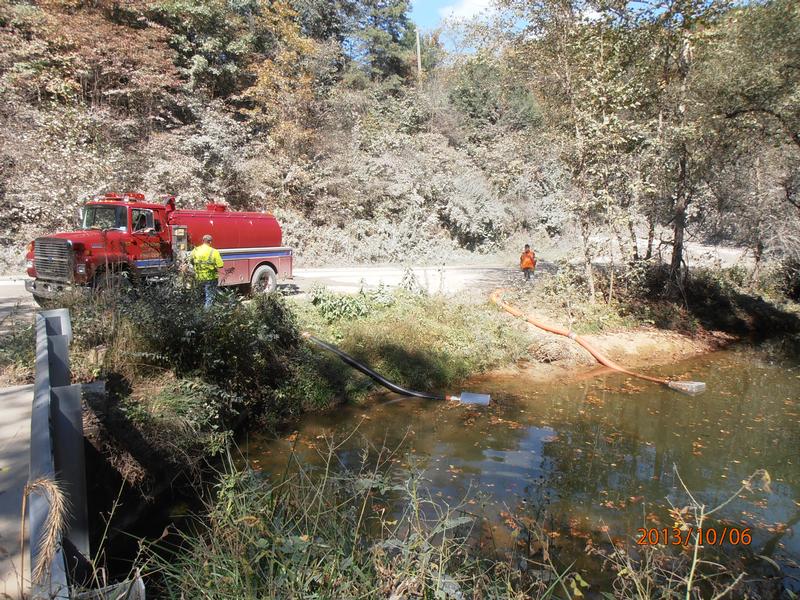
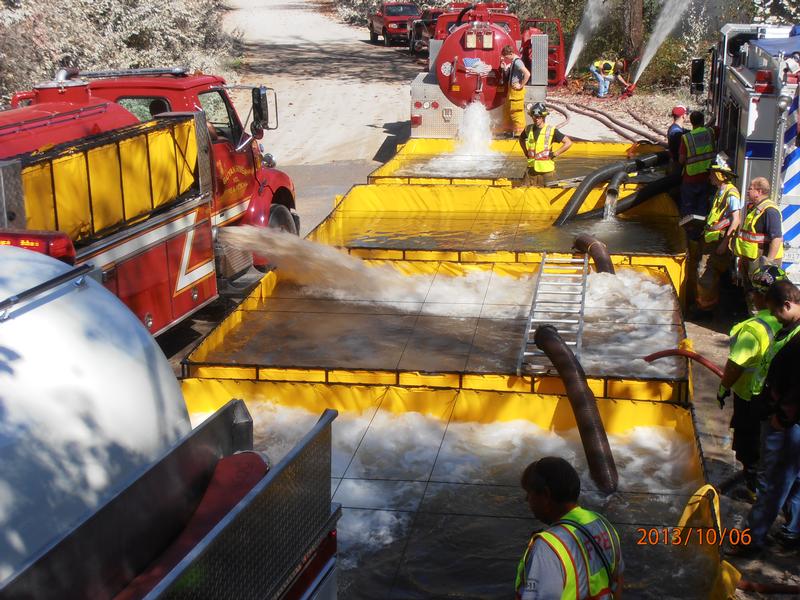
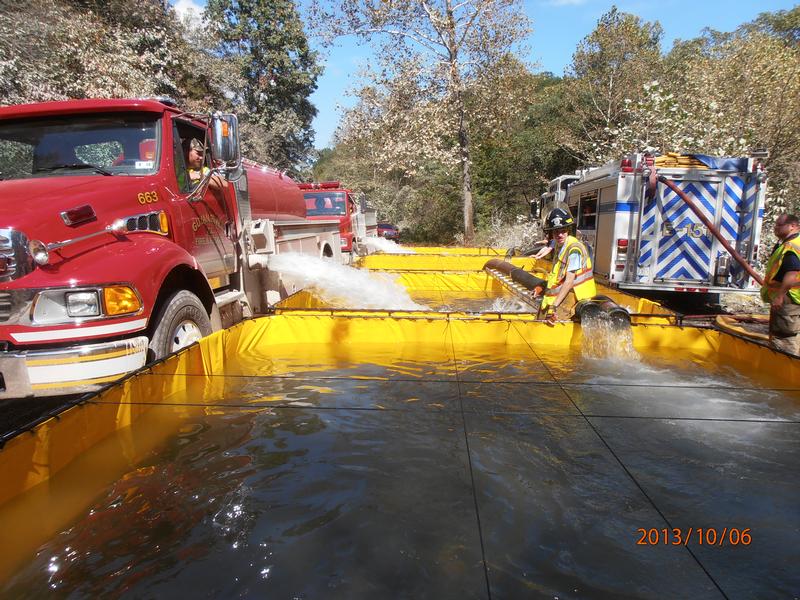
Fill Site #2. Vacuum tanker = No Fill site Pumper! Simple. Effective. Productive.
Hose lay to stream approx 40'
The leaves created havoc all day, slowing our fill times. However, we do not think a fill site pumper could have kept prime to establish a productive fill site (we couldn't maintain prime at the dump site due to the leaves)
Got Big Water? 7000 gallon arriving back at the fill site. When operating with alternating fill sites on narrow roads, sometimes you have to back in to maintain a clear travel lane for other tankers.
Double team.
Since vacuum tankers fill and dump at the same rates, they often run in pairs since they don't have to wait at the fill site to be filled.
Uh-Oh! This was my bad, but we still got the water we needed, just lost time maneuvering after they were empty.
Rt 34 VFD (Putnam County WV) new 2600 gallon Firovac tanker.
Glen Whittington is a member of the Buffalo VFD & an WVU Fire Service Instructor. He did something that I had never seen before that made the dump site much safer. He blew a whistle any time he saw a tanker approaching the dump site. It was very effective and made everyone aware of their surroundings. Great job Glen!
Transferring water into the last dump tank after setting up the second pumper.
Drafting from the last dumptank in line is not an ideal situation, but one that we were dealt. Note the large strainer