| A fire pump's capacity is affected by a number of factors: one of the more important ones is "lift." Lift is generally defined as the vertical distance from the surface of the water to the eye of the pump impeller. The greater the lift, the less the pump can discharge. This makes sense of you stop and think about it - the pump has to work to get water into it and it has to work to push water out of it -and a pump only has but so much work it can do. Thus - the more work needed to get the water in - then the less remaining work available to get the water out.
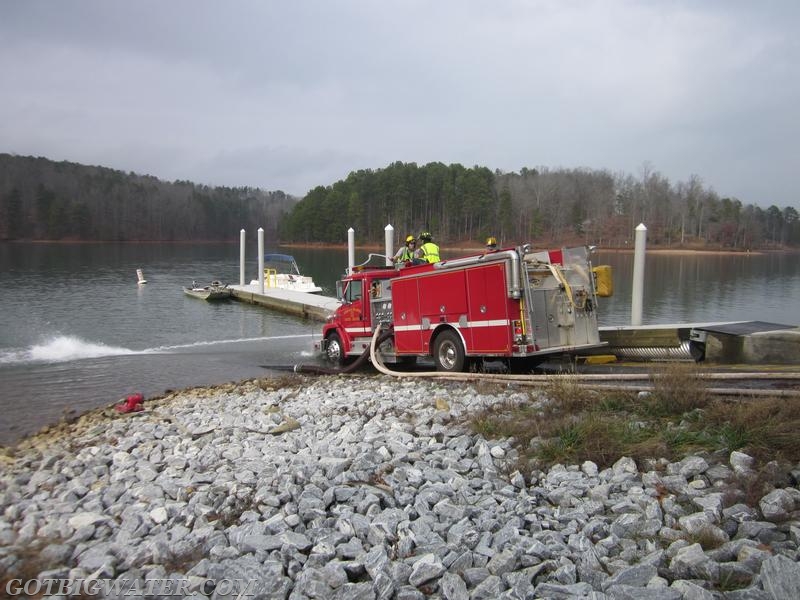
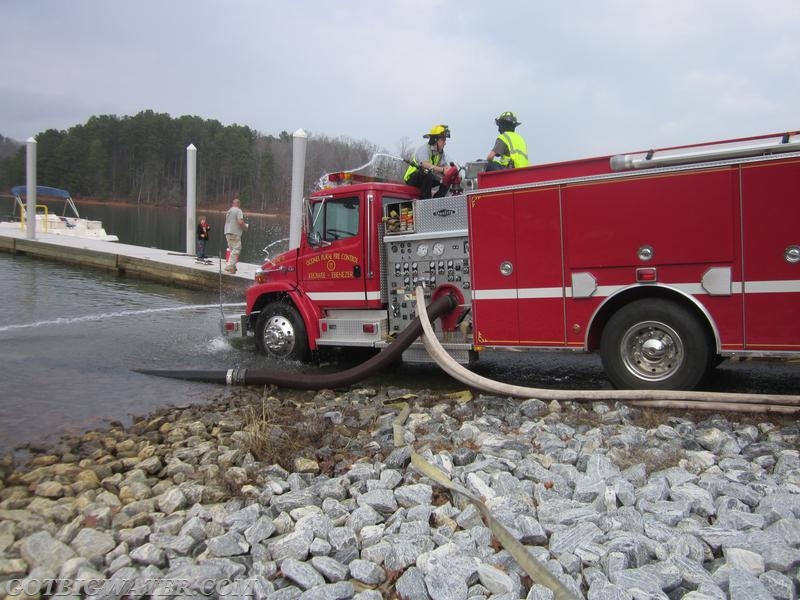
Experienced pump operators know that when drafting, they need to get the pump as close to the water as possible so that lift can be minimized. This becomes even more important when running pumps that are on the smaller side - say, 1,250 gpm and below.
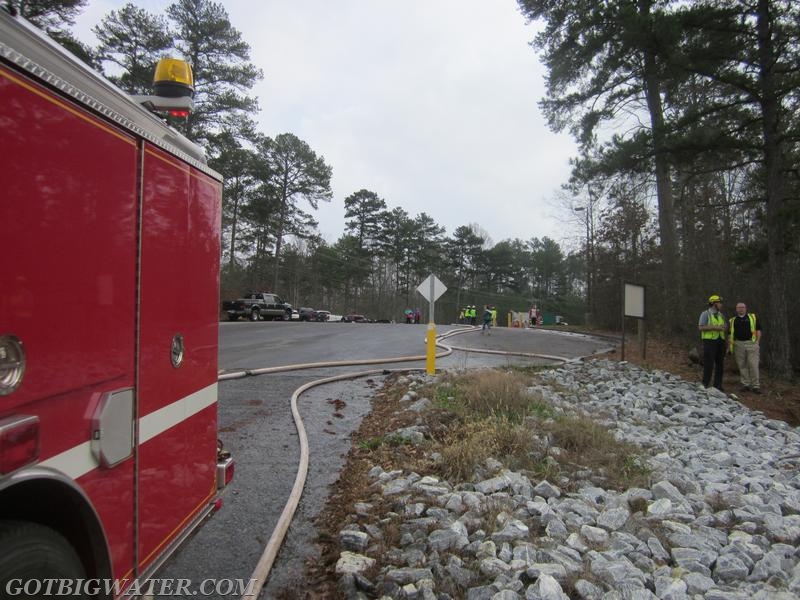
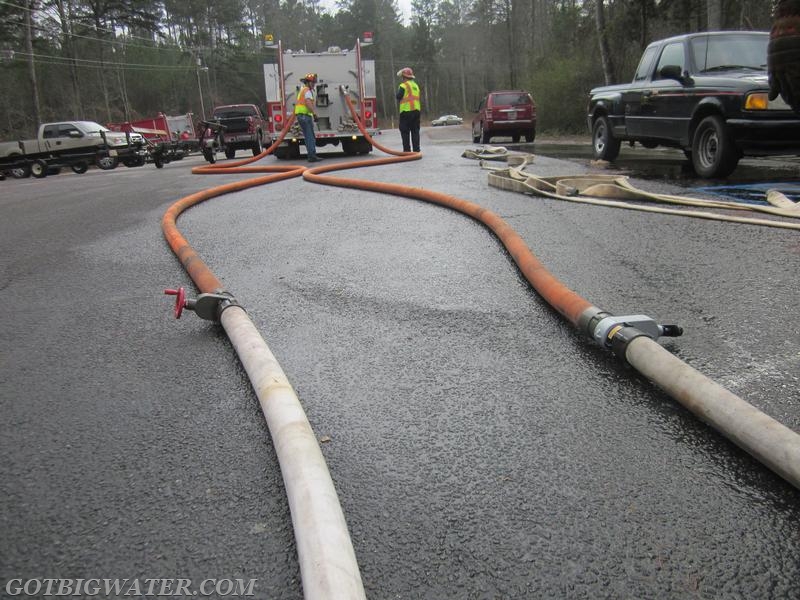
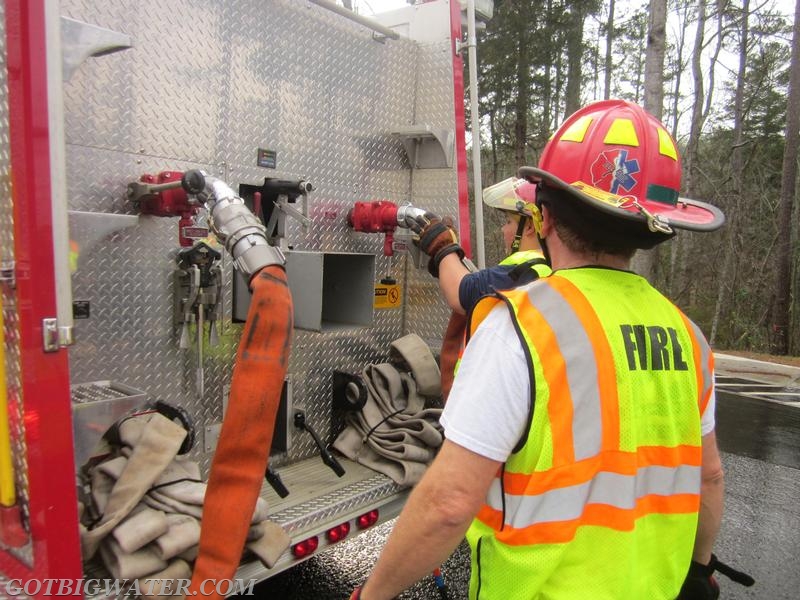
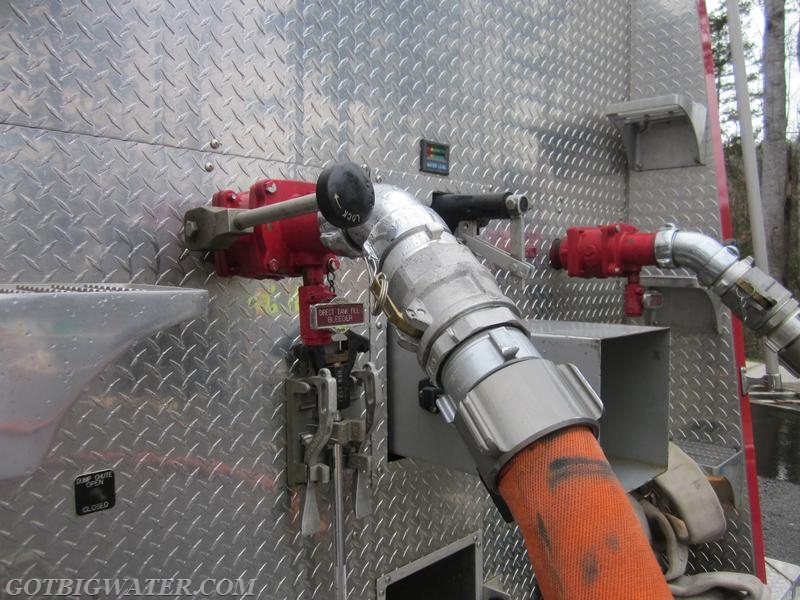
The photos in this News Story were taken at one of our seminar's in Oconee County, South Carolina. The operator of this pumper was faced with setting up a tanker loading site using a 1,250 gpm pumper that only carries 20 feet of hard suction hose and is not equipped with LDH. The operator and crew did a good job of getting the pump as close to the water as safely possible and using dual, 3-inch lines to support the loading station. While not an ideal set-up: it was ideal for the equipment that they had on that pumper and they were able to support a loading rate in the neighborhood of 800 gpm. |